Western students took to Portugal this summer to learn about museum studies

This news story was drafted for Western News (modified version published on September 23, 2025).

This summer, just one week after wrapping up spring quarter final exams, nine Western students headed to Portugal for an intensive three-week learning experience as part of a new course called Museum Studies and Archaeological Heritage.

The course is a faculty-led global learning program through Western’s Education Abroad office and led by Assistant Professor of Anthropology, Marianne Brasil.

After a long international flight, students arrived in the heart of Vila do Conde, just north of the Porto city center, where they would be living together for three weeks. After a couple of days to settle into life in Portugal — while enjoying the festivities of the local Saint John’s celebration — they spent three weeks immersed in Portuguese culture. They learned about museum conservation and Portuguese archaeological heritage through hands-on work in the municipal archaeology lab, took excursions to archaeological field sites and museums, and attended experimental archaeology workshops and demonstrations.

On the first day in the lab, managed by the Archaeology Office within the Vila do Conde Municipality, students were faced with a challenge at each of their workstations: a tray with two ceramic objects that had been broken to smithereens, and which they would spend the next couple of weeks reconstructing and preparing for a mock exhibition.

Most days of the course were spent in the lab, working on their reconstructions while learning from expert colleagues about various conservation techniques and practicing their hands at methods including metal cleaning via sand blasting, using a scalpel at the microscope, and washing, labeling, consolidating, and reconstructing ceramics. The work was difficult and sometimes tedious but rewarding! And there were only one or two small mishaps with the adhesive…
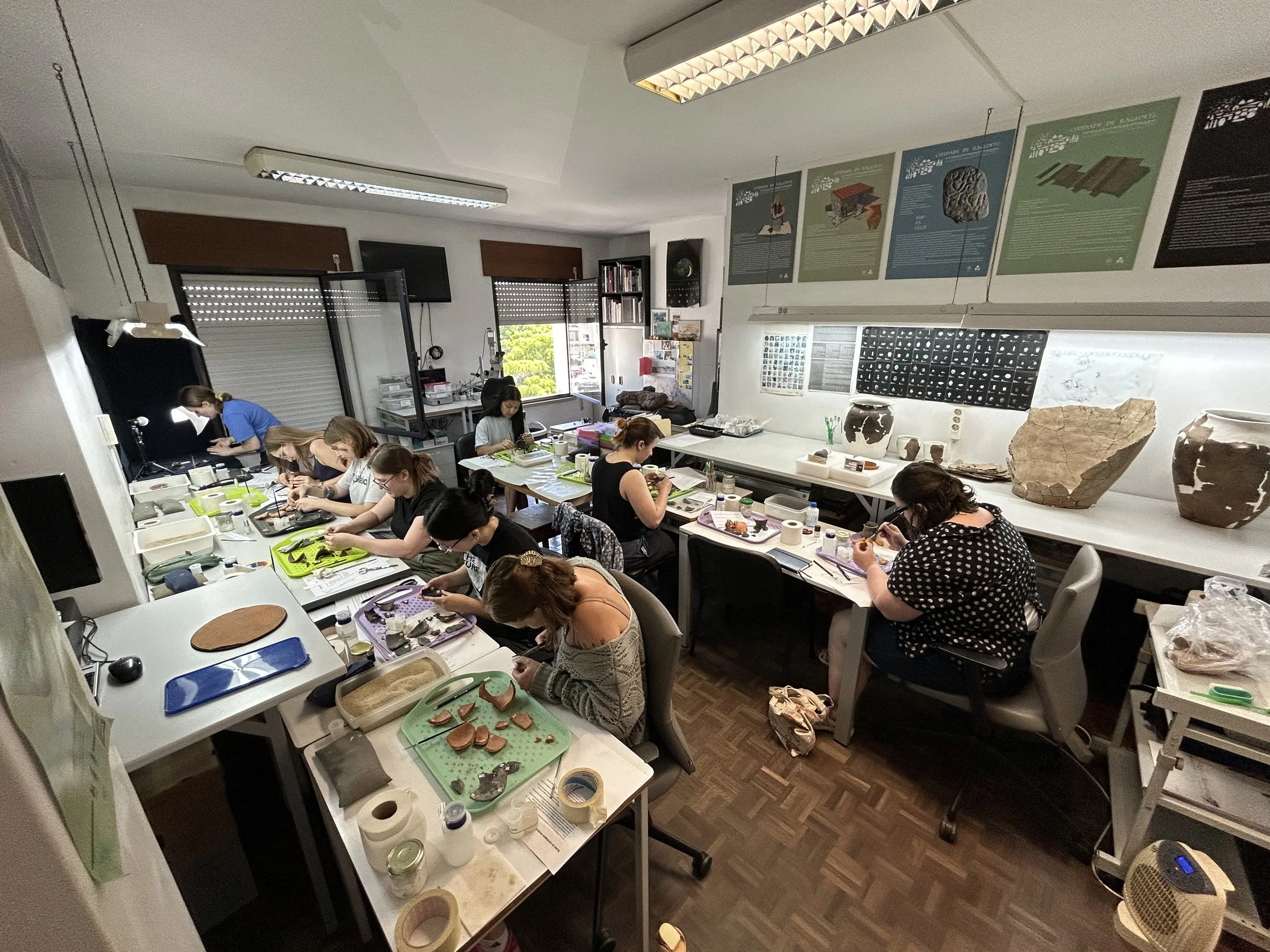
Students working on ceramic reconstructions in the Vila do Conde archaeology lab

Excursions to local archaeological sites helped students learn about the landscape, current excavations, and context of the materials being studied in the lab. The sites in this area are known as “castros,” or “hillforts,” because of their fortified structures positioned at high vantage points (usually the top of a hill, with beautiful views of surrounding areas). The coastal site of Castro de São Paio was a student favorite for its seaside beauty. Visits to Cividade de Bagunte and Citânia de Briteiros demonstrated the variation in size and occupation patterns across sites in this area, as well as efforts at site reconstruction, ecological restoration, and public engagement activities.
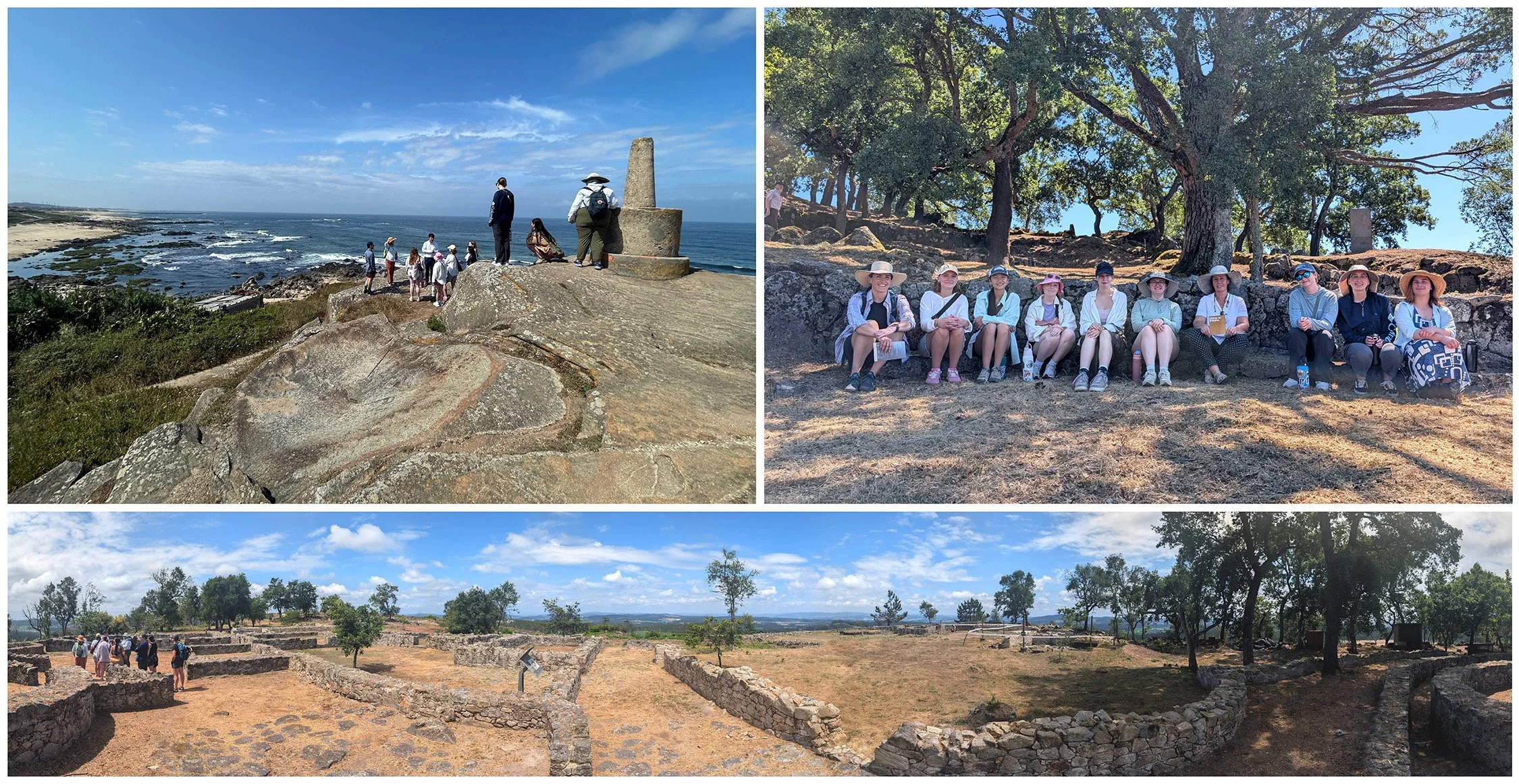
Excursions to archaeological sites: Castro de São Paio (top left), Citânia de Briteiros (top right), and Cividade de Bagunte (bottom)

As part of these excursions, students had discussions with Portuguese colleagues about public engagement and support for archaeological science. In the lab, they also had the opportunity to learn about cutting-edge archival methods, and to contribute to research and outreach resources through digitizing archaeological artifacts and replicas via 3D surface scanning.
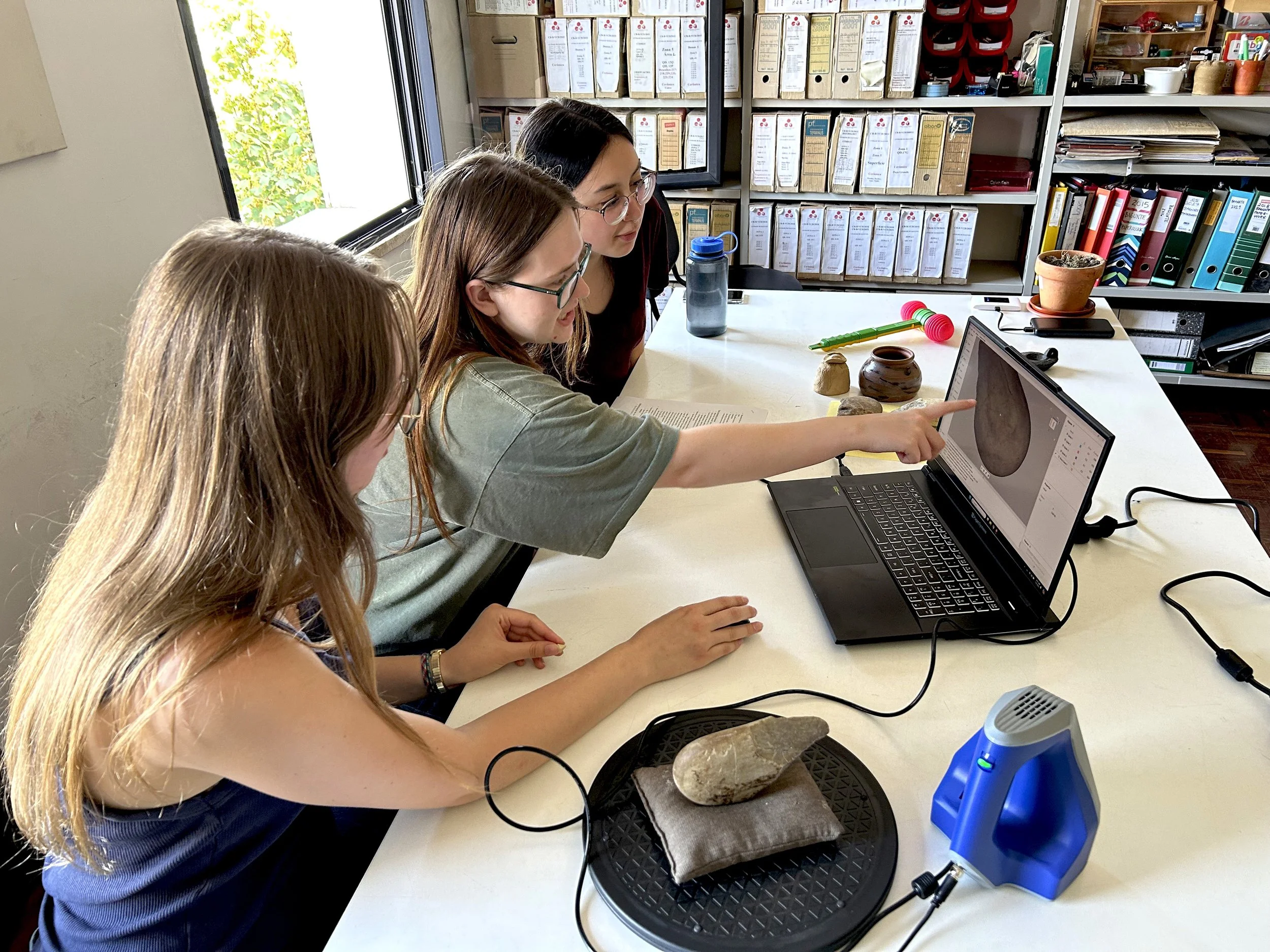
Students 3D surface scanning a handaxe from a local site

Two experimental archaeology experiences were among the highlights of the program. These were led by local ceramicists who use a mix of modern and traditional production techniques. One full day was spent on a pottery workshop where students got to get their hands dirty and learn how to make various kinds of hand-formed pottery, as well as how to make and use molds.
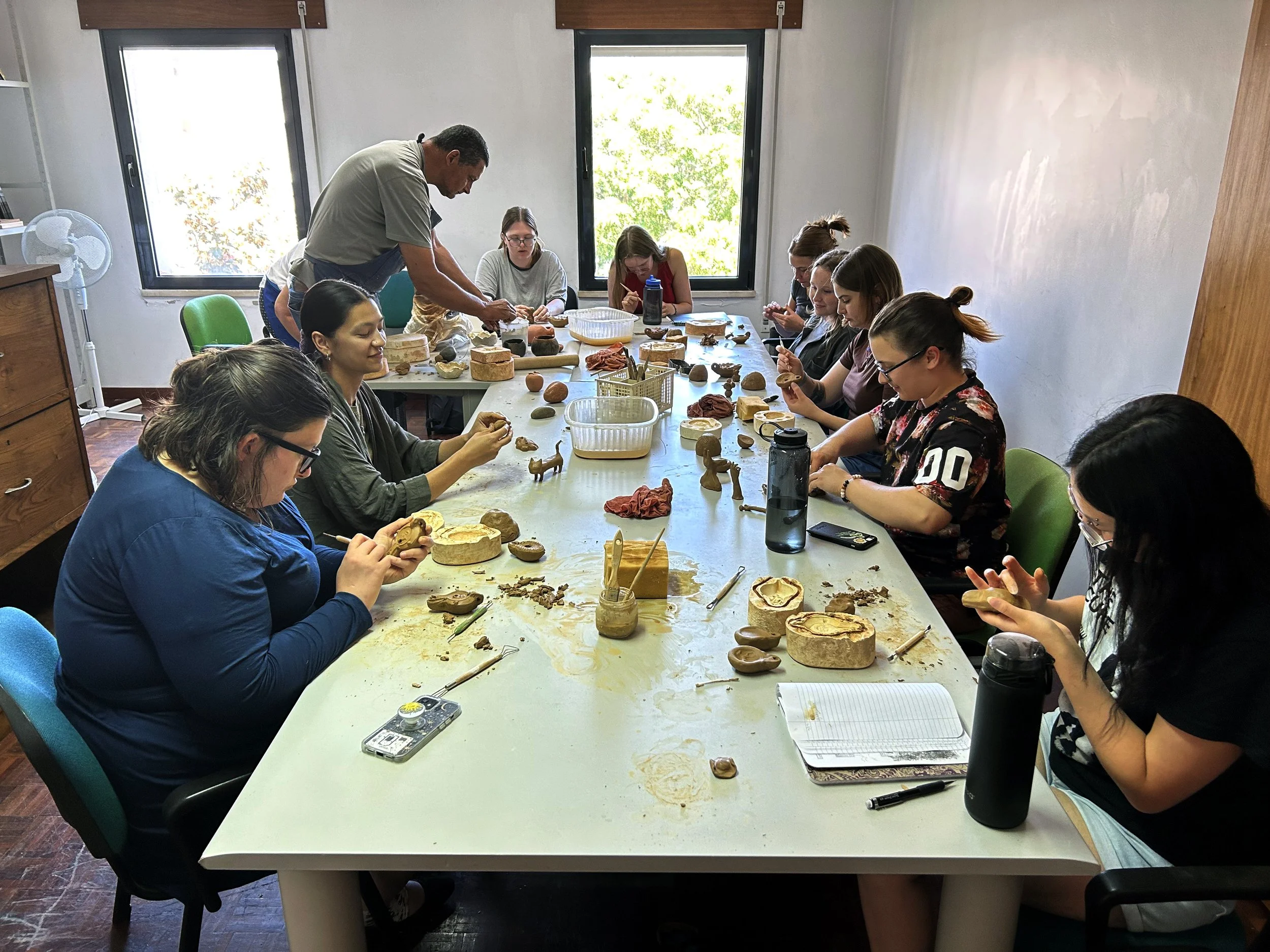
Pottery workshop led by local ceramicist and art instructor

 On one of the final days of the course, the class loaded up into a minibus and drove inland to the beautiful mountainous region of Gondar. Here, students got to try their hands at multiple stages of pottery production, from pounding the clay nodules into powder, to working with wet clay on the traditional hand-powered low potter’s wheels.

But the most spectacular part of this experience was the pottery firing, using a traditional method — ‘soenga’ — which involves a giant bonfire in a large pit. This ancient firing technique has deep roots, having been practiced by the people of the Castro Culture of the Iron Age of Portugal to produce a beautiful and distinctive blackened style of pottery. 
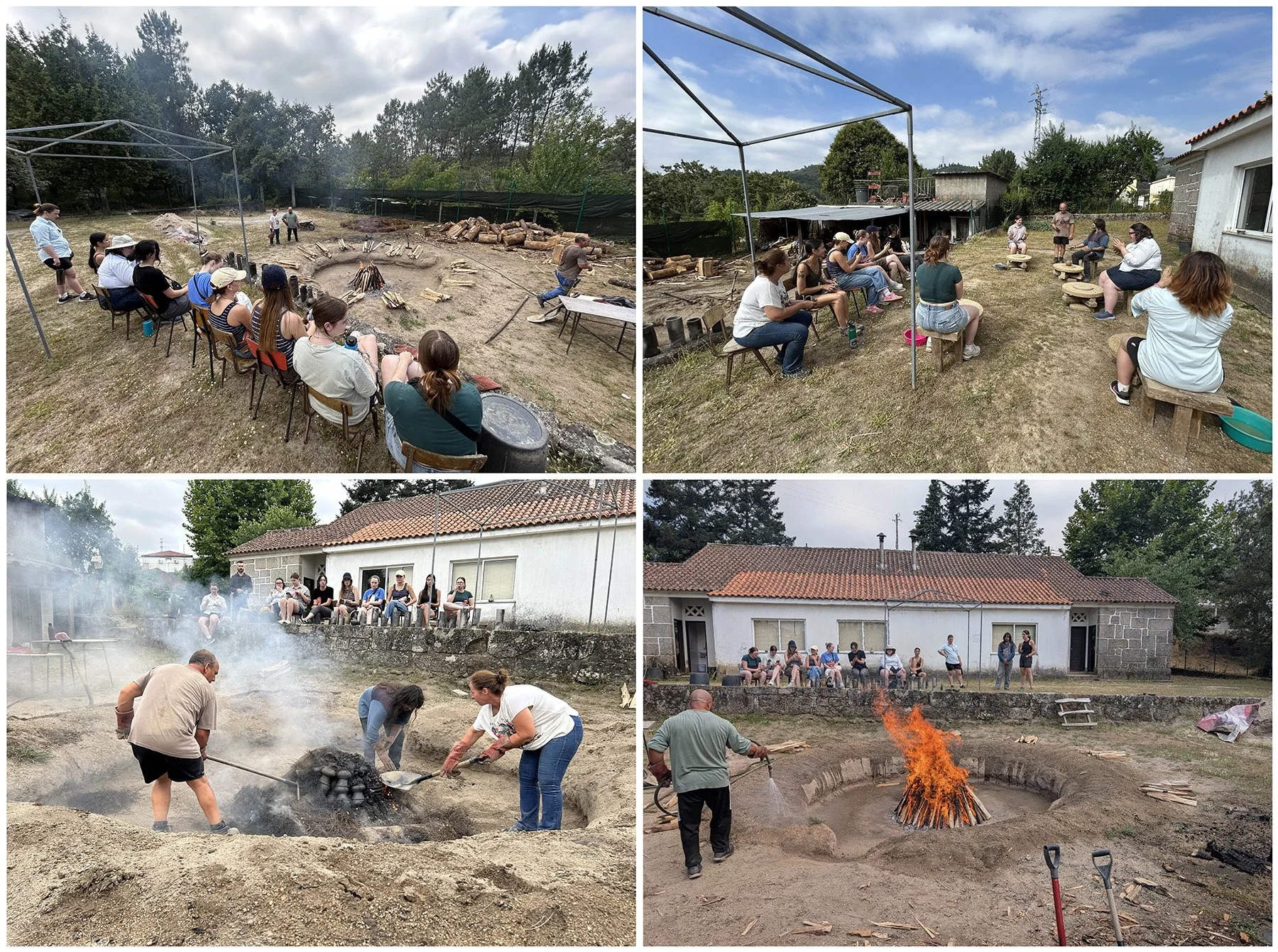
Excursion to Gondar to learn about traditional pottery production and firing techniques

These three weeks held many unique learning experiences and built a tight-knit community among the group, undoubtedly yielding lifelong friendships and memories.

The course would not have been possible without the collaboration and support of Portuguese colleagues, especially expert conservator Ana Valentim, head of the Municipal Culture and Tourism division in Vila do Conde, Pedro Brochado de Almeida, ceramicists Moises Tomé, João and Cesar Teixeira, museum expert Vitor Hugo, and archaeological expert Prof. Mariah Wade.

Prof. Brasil hopes to offer this course again in Summer 2026. Interested students should keep an eye out for updates and program information on Western’s Ed Abroad page.

A bittersweet reflection on my time at UC Berkeley as I move on to my new academic home

I recently had the joy of being interviewed for the UC Berkeley Visiting Scholar and Postdoc Affairs (VSPA) News, as part of their Postdoc Spotlight series. Many thanks to VSPA News Editor Simmerdeep Kaur for inviting me to be featured! We talked about my academic journey, how it got me into my research area, and what motivates me (spoiler: working with students). You can find the story here.

It was bittersweet to think about moving on from my 10+ years at UCB, but a nice way to wrap up this academic chapter as I move onto the next one. On that note - I can’t wait to meet the students, faculty, and folks at Western Washington University in just a few months!

New job! Find me at Western Washington University starting in September

I’m absolutely thrilled to share that I’ll be starting this fall as an Assistant Professor in the Anthropology Department at Western Washington University! I can’t wait to join my wonderful faculty colleagues and Western students in beautiful Bellingham later this year. I’m especially excited to be teaching and working with students again, and look forward to welcoming undergraduate and graduate students to join me in my research on human origins. If you’re a student interested in research in biological anthropology, evolution, and/or the skeleton, please feel free to reach out! I’d love to meet you.

The happy moment I signed my contract with Western Washington University! 📷: Austin Peck; taken in Berlin, Germany while on a research trip to the Museum für Naturkunde.

(Almost) 1,000 new monkey fossils from Ethiopia just published in three papers at AJBA

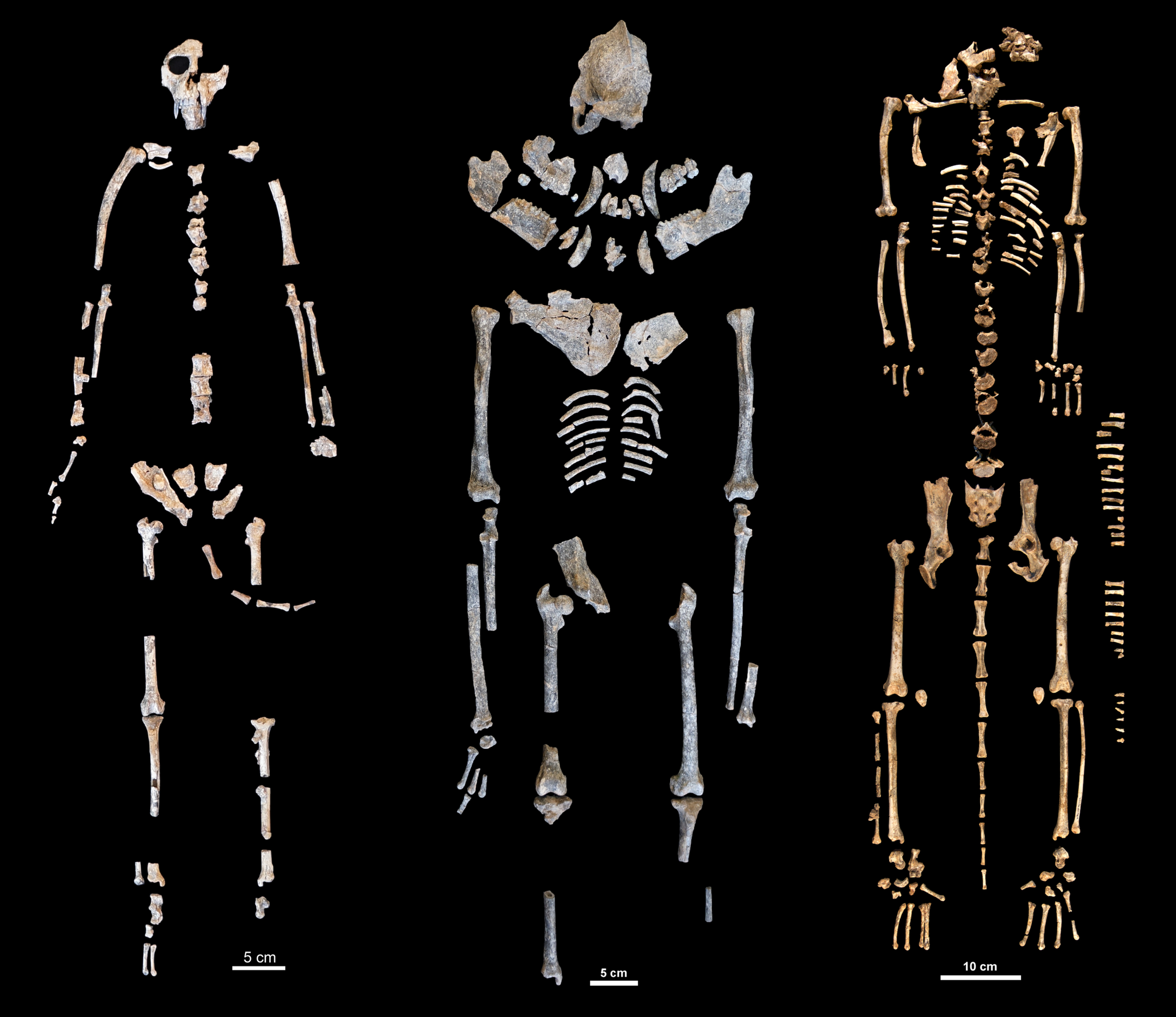
After two pandemic years of writing and review, on top of months of curation at the National Museum of Ethiopia in Addis Ababa, and building on decades of field and lab work by a team of incredible people, I am thrilled to share that we finally have three new papers out at the American Journal of Biological Anthropology! These three papers report on just under 1,000 new monkey fossils from later Pleistocene sediments (ca. 160 & 100 ka) in the Middle Awash study area in the Afar Rift of Ethiopia. It is really rare in paleontology to have hundreds of individuals recovered from the same place and time, and it was this paleontologist’s dream to be able to study population-level variation and subtle evolutionary changes over a couple hundred thousand years, across three monkey lineages. I led the two papers describing the Colobus and Papio fossils, and my wonderful colleague, Cat Taylor (postdoc at the Human Evolution Research Center at UC Berkeley), led the paper on the cercopithecin fossils. These papers were very much a team effort (#TeamMonkey), and we could not have done this without our coauthors, Tesla Monson (Western Washington Univ.) and Ryan Yohler (UC Berkeley), and especially Leslea Hlusko (CENIEH) to guide the way. We are deeply grateful to the many people who made these projects possible and contributed along the way. Please get in touch if you’d like a PDF! And we hope that other researchers will make good use of our dataset, openly available online at figshare.

Skeletons of cf. Chlorocebus (left), Papio hamadryas ssp. (center), and Colobus cf. guereza (right) from the later Pleistocene of the Middle Awash study area in the Afar region of Ethiopia.

New paper on estimating prenatal growth rates in the fossil record

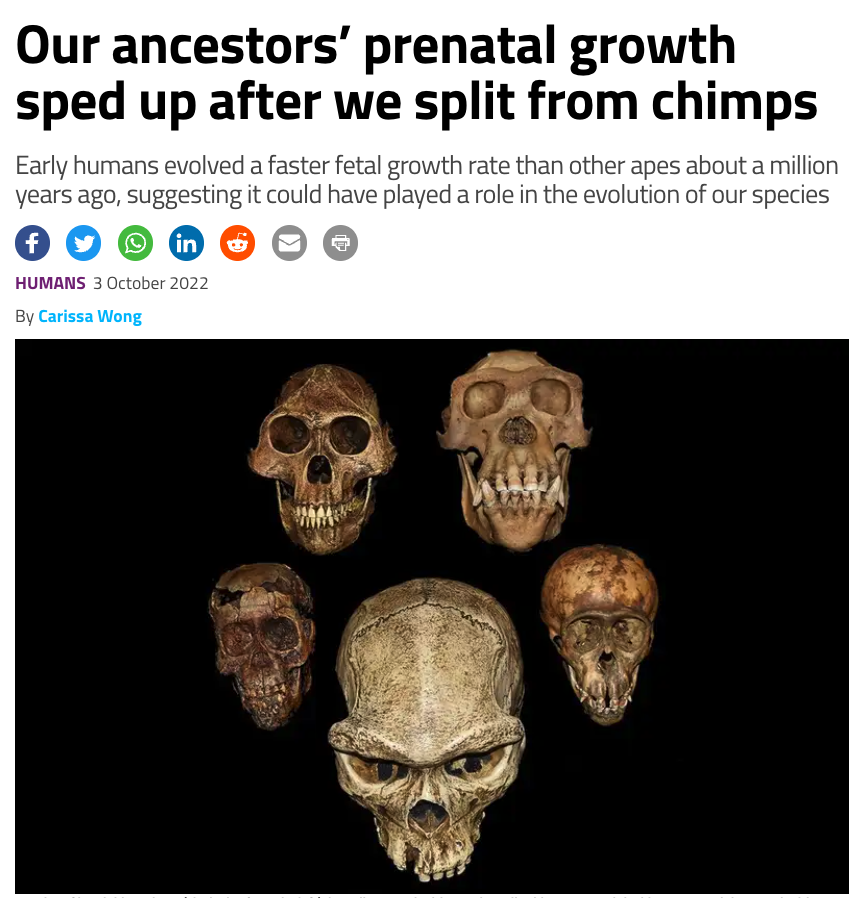
We have a new paper out today in PNAS! This project, led by Tesla Monson (Western Washington University, WWU), and in collaboration with Andrew Weitz (WWU) and Leslea Hlusko (Spain’s National Research Center on Human Evolution, CENIEH) developed two new models for estimating prenatal growth rate: one from dental (molar) proportions, and one from endocranial volume. We applied these new methods to the hominid fossil record to find that prenatal growth rates generally increased throughout the Plio-Pleistocene, and that a human-like prenatal growth rate evolved less than 1 million years ago, but well before the emergence of the modern human species (ca. 200-300 ka). These new methods open a new and really valuable window onto pregnancy in the fossil record by using a part of the anatomy that dominates the vertebrate fossil record (another reason to love teeth!). You can check out the paper here, some coverage by New Scientist here (shown below) and Western Washington University here, and a short summary by Science here.

New paper out today on the evolution of dental proportions in hominids

I’m thrilled to share that my first first-authored paper, “A genotype:phenotype approach to testing taxonomic hypotheses in hominids,” was published today in The Science of Nature. What started as a “simple” project back in 2016 (or was it 2015?) shape-shifted through several rounds of internal and external review, finally landing on its final published form. This work explored how two genetically-patterned dental phenotypes, premolar-molar module (PMM) and molar module component (MMC), vary across hypothesized hominid genera and species (see Hlusko et al. 2016 for the foundation this work was based on), and demonstrates how insights from genotype:phenotype studies can be applied to the fossil record. I’m deeply grateful to my coauthors, Tesla Monson, Chris Schmitt, and Leslea Hlusko, for sticking with this through the long ride and making the work so much more enjoyable. Please reach out if you’d like a PDF copy! I’d love to share our work with you.

Finishing a PhD in the middle of a pandemic

The last moment of "normal" life that I can remember really clearly is a lovely evening spent with friends, taking a brief and much-needed pause from dissertation writing to belatedly celebrate my birthday. That was the evening of March 6th, 2020. Even as I enjoyed the company of friends that night, I was constantly thinking about the months ahead and managing worries about looming chapter draft deadlines. I had no idea what the next few months would bring.

In early March, my plan was to file my dissertation at UC Berkeley by the mid-May deadline, and then to start as a postdoctoral researcher at the Berkeley Geochronology Center. I was frequently daydreaming about my plans to head to Spain as a visiting researcher for fieldwork in mid-June. As I write this in mid-July, I'm sitting in my home office trying to stay cool as a heatwave passes through in Austin, TX, where I'll be working remotely as a postdoc for the foreseeable future. The events of the past few months feel like a blur, and I’m still reeling from the sharp change of course.

March was a strange month, but the really odd part was that it didn’t feel that strange at the time. In January and February, I’d spent the better part of every day sitting at my desk at home, writing, revising, and often holding my head in frustration, pushing my dissertation closer and closer to the May 15th finish (/dead)line. In early March, when the ‘Shelter in Place’ order in my county was implemented, the impact to my day-to-day life was actually relatively minimal. Other than missing a few weekly trips to campus and one or two weekly outings to a favorite restaurant as a break from writing, my daily experience was mostly the same as before COVID-19 really started to impact the Bay Area.

Three exceptions to this sense of normalcy do, however, stand out as really memorable. First, remembering to grab a mask and hand sanitizer on the way out the door to walk my pup, and then having to bob and weave around neighbors to keep a six+ foot distance between us. Second, the stressful first experience of grocery shopping with my partner, who’s trained in sterile lab techniques and exceedingly careful about minimizing potential exposure (it’s clear that I’m the paleontologist in the family, more familiar with the hazards of dirt and superglue). This grocery shopping adventure resulted in us deciding that grocery deliveries were probably a less stressful option moving forward, although that was not without some humorous mishaps (e.g., a replacement of six pounds of our favorite snack, in-shell sunflower seeds, for six pounds of sunflower kernels – enough salad topping for the next six months, at least). And the third memorable exception to a sense of normalcy: calling my parents daily to reassure them, and repeatedly stressing the importance of their careful actions for their own health, and for the greater good of public health.

Things started to feel less and less normal in April, when it became more and more clear that the impact of COVID-19 would be long-lasting and far-reaching. Around this time, it became apparent that my plans to travel to Spain would need to be significantly postponed. It was also around this time that my partner lifted our spirits by accepting a dream job for a small company based in Austin, TX. Sitting in our apartment just north of Berkeley, without a yard, unable to enjoy any of our surroundings in the Bay Area while paying university-subsidized but still excessive rent costs, we decided it made perfectly good sense to move to Austin where we’d at least be able to afford some outdoor space. But before we could make the move, I needed to clear the daunting hurdle of (finally!) finishing and submitting my dissertation.

I have a tough time remembering April and early May, probably because I’ve subconsciously blocked the memory of back-to-back-to-back 12+ hour days stress-writing at my desk, with my pup providing moral support from under my chair. Focusing on writing and revising in the middle of a pandemic required silencing all notifications, banning myself from checking any news sources, and keeping a constant supply of coffee at hand (the latter of which I can thank my partner for). Somehow, by mid-May, after multiple rounds of revisions with my committee members, I had a finalized draft ready to submit. But, I still needed the approving signatures of my committee members.

My pup, Tater, hanging out under my chair while I wrote.

One of the most bizarre parts of filing a dissertation in the middle of a pandemic was collecting the three signatures that would finally seal six years of my life and grant me a PhD. I drove to my advisor’s house, where she had left my signature page on her front steps, bearing the signatures of two of my committee members, and had thoughtfully taped two congratulatory lollipops to the envelope (more on that below…). She came out to wave at me and congratulate me from her patio (a good ten feet away, of course) and we said our goodbyes, complete with air hugs. With two signatures in hand, I only needed one more. The following day, I coordinated with my third committee member to meet on a street corner near his house. We met on a walking path, under the train tracks, and I set down a clipboard with my signature page on a bench and backed away several feet to maintain a safe distance between us. After a brief and socially distant exchange, I thanked him, we wished each other the best, I picked up the clipboard, and we parted ways. I got back into my car, took off my mask, sanitized my hands, and immediately scanned my completed signature page with my phone (lest anything unexpected happen on my six-minute drive home).

Picking up my signature page (and congratulatory lollipops) from my advisor’s house.

The months between filing my dissertation on May 23rd and today somehow simultaneously feel like days and years. After the anti-climactic feeling of filing my dissertation without the anticipated graduation and celebration with loved ones, my partner and I packed our life into a 16-foot-long shipping container and said our socially-distant goodbyes to friends and family in the Bay Area. Leaving our home state, and our home in Berkeley of ten years, without being able to give our closest friends and family a hug brought out the bitter in the bitter-sweetness of this new beginning. With mixed feelings, we loaded up our car at the end of May and started the 29-hour drive from Berkeley to Austin, stopping only to give our puppy (and ourselves) bathroom breaks, fill up our gas tank, and make quick stops to see our families. Stopping on the side of CA Interstate 5 to see my parents in a Taco Bell parking lot, and again further south to see my partner’s family in a Red Lobster parking lot was surreal, to say the least, but was the closest thing to closure we got as we left California.

Fast-forward past the weeks of getting moved in and settled in our new home in Austin, TX, and today I’m spending my days mostly reading for new projects and writing up old ones, interspersed with Zoom meetings and short breaks to chase my pup around the yard. A couple of weeks ago, Berkeley Graduate Division mailed me my “Phinally Finished” lollipop, keeping the decades-old tradition alive and providing a little bit of comfort in something that feels just a tiny bit normal, but also feeling like a relic of a time long ago. I have no idea what the remaining two years of my postdoc will look like in the midst of COVID-19, but for now I’m choosing to reflect on the few silver linings that have come with the experience of the last few months. I’ve built in ways to keep in touch with family and friends in ways that I likely wouldn’t have, had it not been for the months of isolation. In the absence of social outings and trips to favorite restaurants, I’ve tried new recipes, taken up embroidery, planted a garden, and learned how to make my mom’s bread - the smell and warmth of it bringing a little piece of familiar comfort to my new home. And lastly, I’ve been able to stay connected to my intellectual family back in Berkeley. Even though over a thousand miles now lie between us, I’m able to forget about that distance when I see everyone together on Zoom. Even though the next few years are fogged with uncertainty, every day I’m comforted by the steadiness and support of my intellectual family, and my motivation rekindled to keep doing science and to keep making our scientific spaces better places for anyone who wants to join us.

The happy day I received my “Phinally Done” lollipop in the mail.